Start with the as-built drawing from your county health department — it shows the exact tank location. If records aren't available, trace the sewer pipe leaving your house foundation and probe 10–25 feet along that line with a soil probe rod. Always call 811 before probing or digging to have utility lines marked.
Step 1 — Get the As-Built Drawing
The fastest and most reliable starting point. Contact your county health department or environmental health office and ask for the septic system as-built drawing — the document that shows the exact tank location with measured distances from permanent landmarks like house corners or property lines. Most counties keep these on file, and many now have them available online through permit portals.
If you've recently bought the home, check your closing documents — previous owners sometimes include the as-built in the paperwork.
Step 2 — Call 811 Before Probing or Digging
Before you push any probe rod into the ground or pick up a shovel, call 811 (free, nationwide). Underground utility lines — electrical, gas, water, telecom — can run anywhere on your property, including across the tank area. 811 dispatches utility companies to mark lines within a few days. This step is not optional.
Step 3 — Visual Clues in the Yard
Your yard often provides clues before you pick up a probe:
- Green patch of grass — slightly greener or faster-growing grass over the tank or drain field area from consistent moisture below
- Subtle depression or mound — a slight rise or dip in the ground can mark the tank top or a buried lid
- Dead grass in winter — the tank retains heat, which can kill grass roots above it during hard freezes, leaving a visible dead patch
- Cleanout caps — white or green plastic caps at or near grade level near the tank area
Step 4 — Follow the Sewer Pipe
Find where the main drain line exits your house — typically through the basement wall or crawlspace floor. Note the direction it's heading. Go outside and search in a straight line from that exit point. Tanks are almost always within 10–25 feet of the foundation, directly in line with the outgoing pipe.
Step 5 — Probe the Soil
A metal soil probe rod lets you feel for the solid concrete or plastic tank top without digging. Push it into the ground gently using even pressure — you're looking for solid, flat resistance that covers a wide area, unlike the irregular resistance of individual rocks. Work a grid pattern across the area you've narrowed down.
Probe gently — older concrete tanks can crack under excessive force. When you feel consistent resistance at depth across a wide flat area, that's the tank top.
For standard lawn probing (soft to moderately compacted soil, tank 1–3 feet down): a 36–48 inch rod is the right length. For deeper tanks or rocky/clay soil, go longer and heavier. One-piece rods are stiffer and better for hard soil; sectional rods are easier to store and transport.
Best Soil Probe Rods for Locating a Septic Tank
A soil probe is a one-time purchase that pays for itself the first time it saves you from digging random holes. Here are the best options by category.
| Category | Product | Length | Score |
|---|---|---|---|
| 🏆 Best Overall | UIABOPZ Probe | 33–48" adjustable | 94 |
| 🚀 Most Heavy Duty | T&T Mighty Probe | 78" one-piece | 92 |
| ⭐ Best Professional | Bully Tools | 36" one-piece | 90 |
| 🎯 Best Compact | Varomorus 21 | 21" one-piece | 88 |
| 🔰 Best Long Handle | Homestead 48 | 48" one-piece | 86 |
| 💼 Best Sturdy 36" | Homestead 36 | 36" one-piece | 85 |
| 🎨 Best Corrosion Resistant | UIABOPZ Stainless | 33–48" adjustable | 82 |
| 🔧 Best Portable | InnoLuxe Adj | 32–48" adjustable | 78 |
| 💰 Best Budget | COCONUT Probe | 48" sectional | 72 |
ⓘ Affiliate disclosure: links on this page may earn us a commission at no extra cost to you. Details →
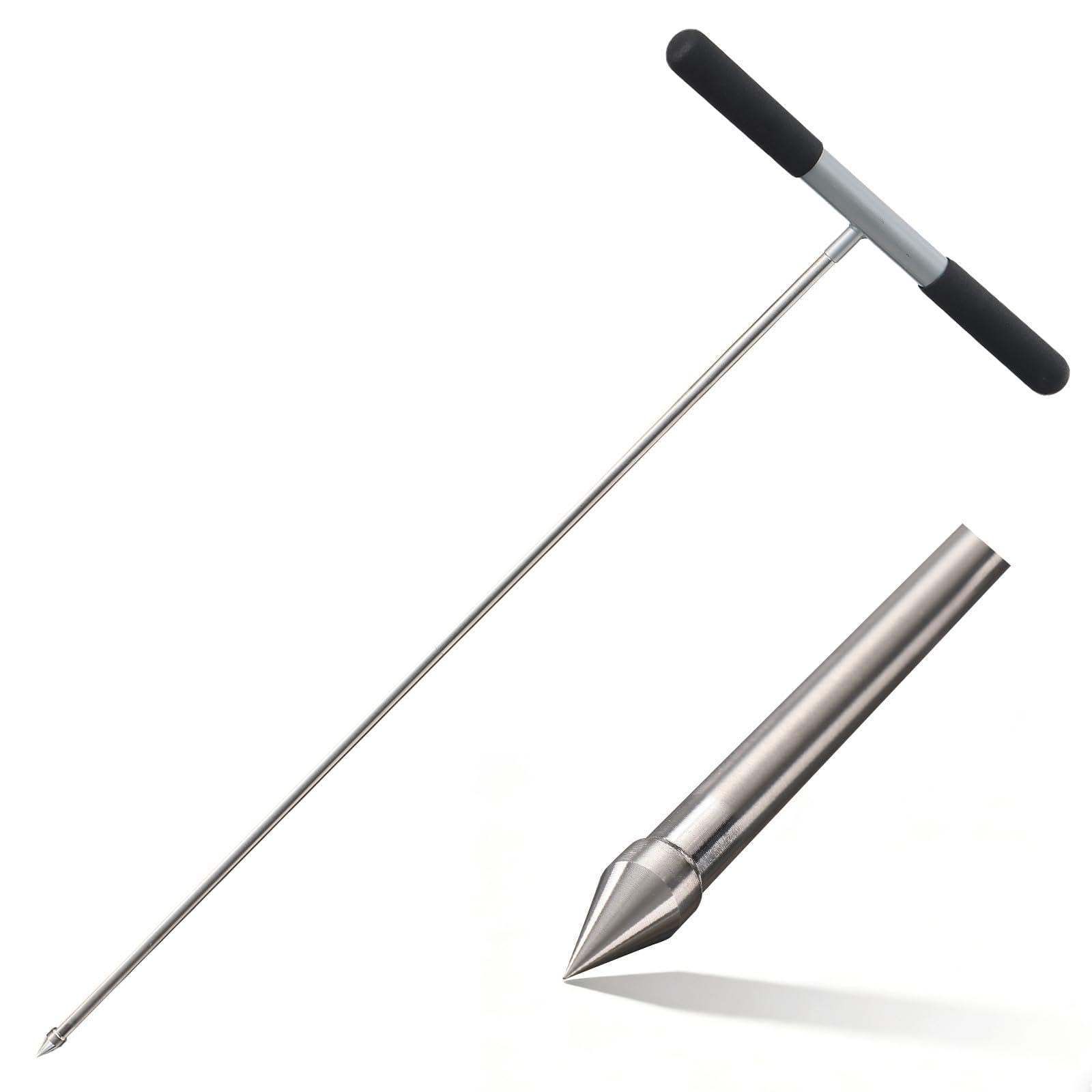
UIABOPZ Probe — Adjustable 33–48"
Adjustable stainless steel probe that switches between a shorter and longer reach — handy when your yard has mixed soil or varying depths. Sharp tip finds edges and pipes without excess digging. Tighten threaded connections firmly before probing.
Check Price on Amazon →
T&T Mighty Probe — 78"
78-inch 7/16" hex alloy steel one-piece rod built for deep reach and hard soils — clay, shale, and rocky ground that shorter rods can't penetrate reliably. No assembly, ready to use. Best suited for storage in a truck or garage; not ideal for small sheds. Aimed at pros and serious DIYers.
Check Price on Amazon →
Bully Tools — 36" USA-Made
Commercial-grade steel construction with a sharpened tip and T-style handle. Made in the USA. 36-inch length is the right size for most residential septic tank searches — long enough to reach typical burial depths, short enough to control precisely. Solid, no-fuss tool that holds up to repeated use.
Check Price on Amazon →
Varomorus 21 — Compact Stainless
Single-piece 21" stainless steel probe — the go-to if your tank is buried shallow or you need easy control in tight yard sections. Won't flex or corrode. Ergonomic T-handle. The compact size limits reach in deep tanks, but for most suburban lots this is perfectly adequate and far easier to store.
Check Price on Amazon →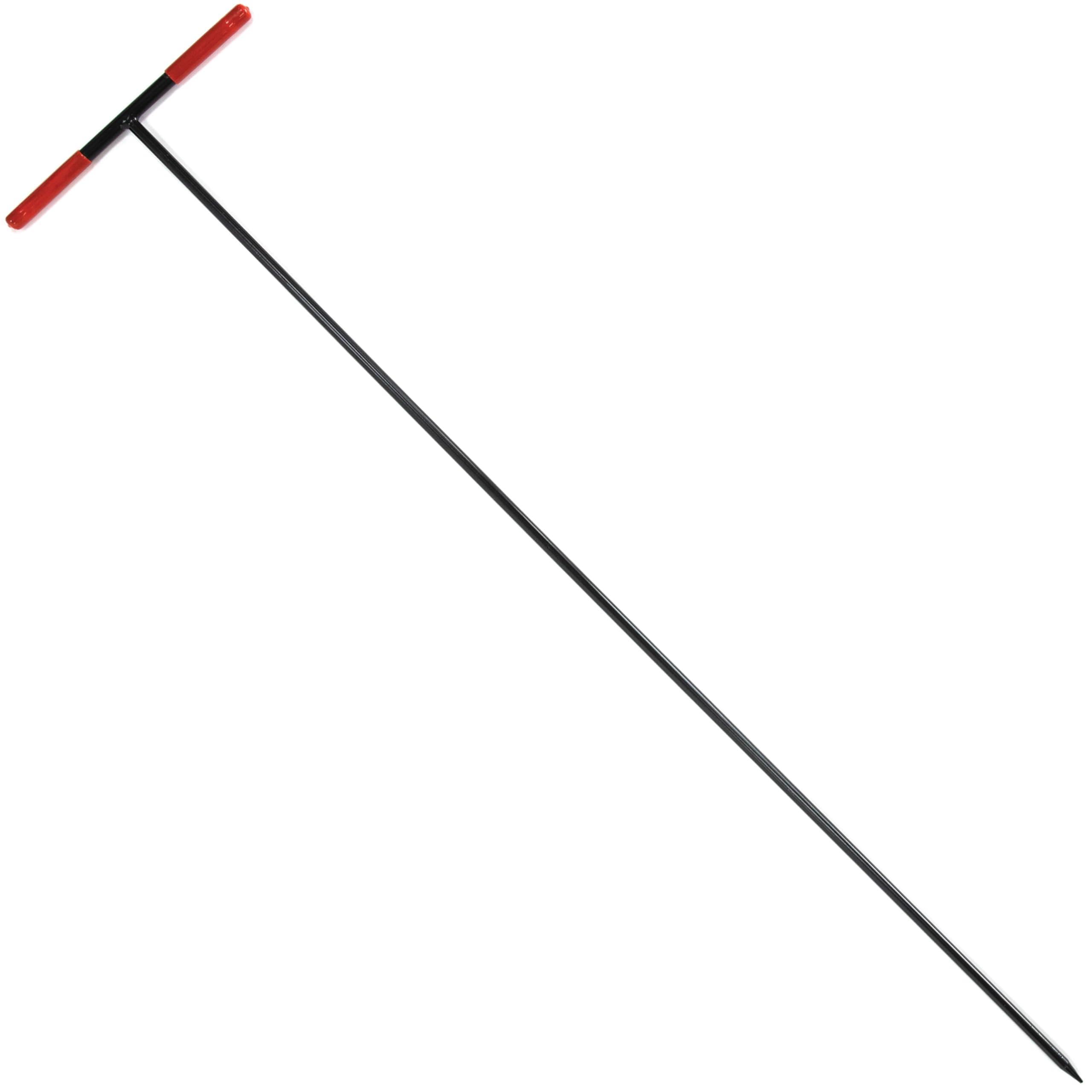
Homestead 48 — One-Piece Alloy Steel
One-piece 48" alloy steel with a wide T-handle — reliable penetration without the flex you get from sectional rods. Good for tanks buried 2–3 feet deep. Wide handle reduces hand fatigue during repeated probing. Powder-coated finish resists wear. Hard clay may require extra force.
Check Price on Amazon →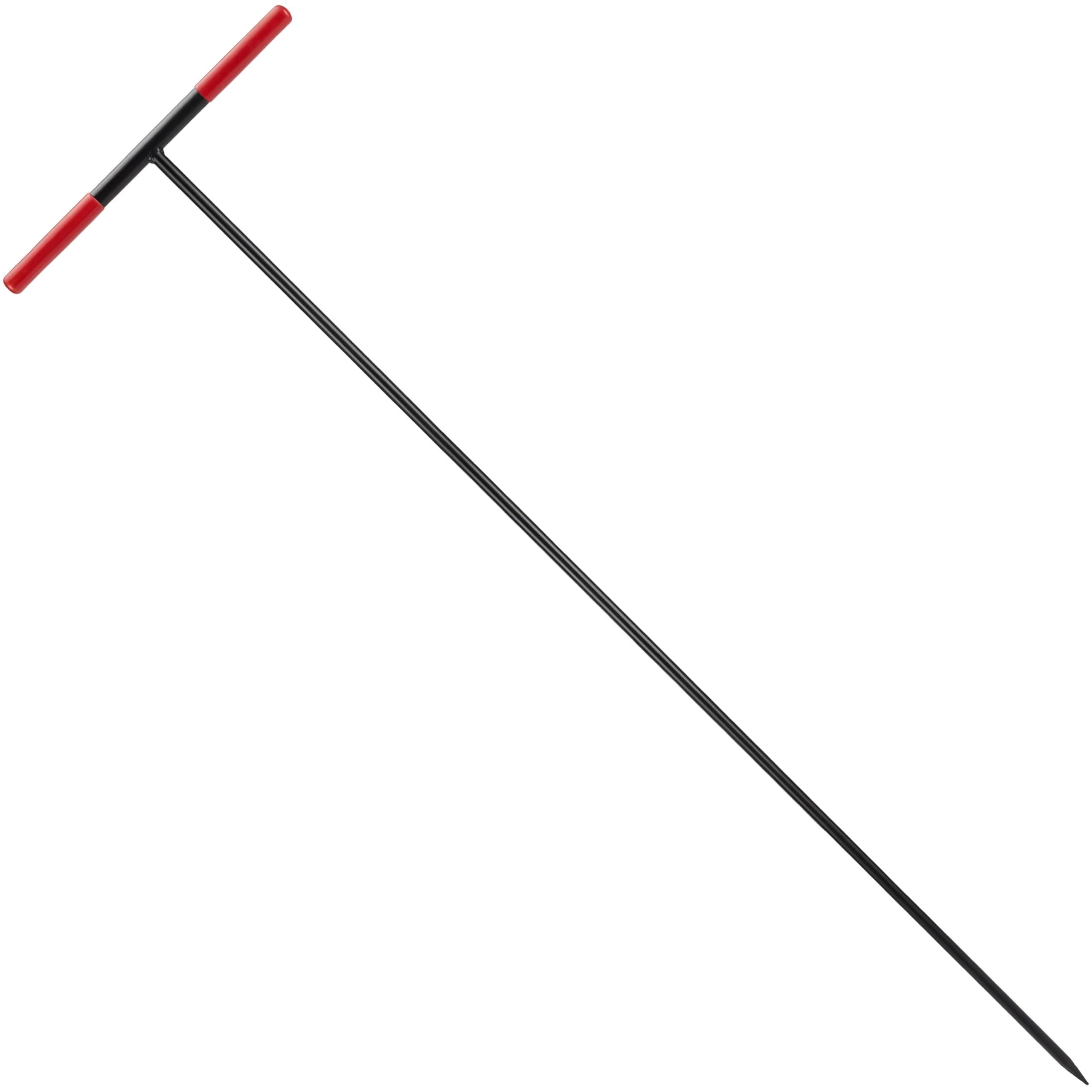
Homestead 36 — One-Piece, No Assembly
Simple, sturdy one-piece 36" alloy steel rod with wide T-handle. No assembly — grab it and probe. Easier to control in tight yards than the 48" version. Good for most residential tanks buried 1–2 feet. Very hard clay may need extra force or a mallet for full penetration.
Check Price on Amazon →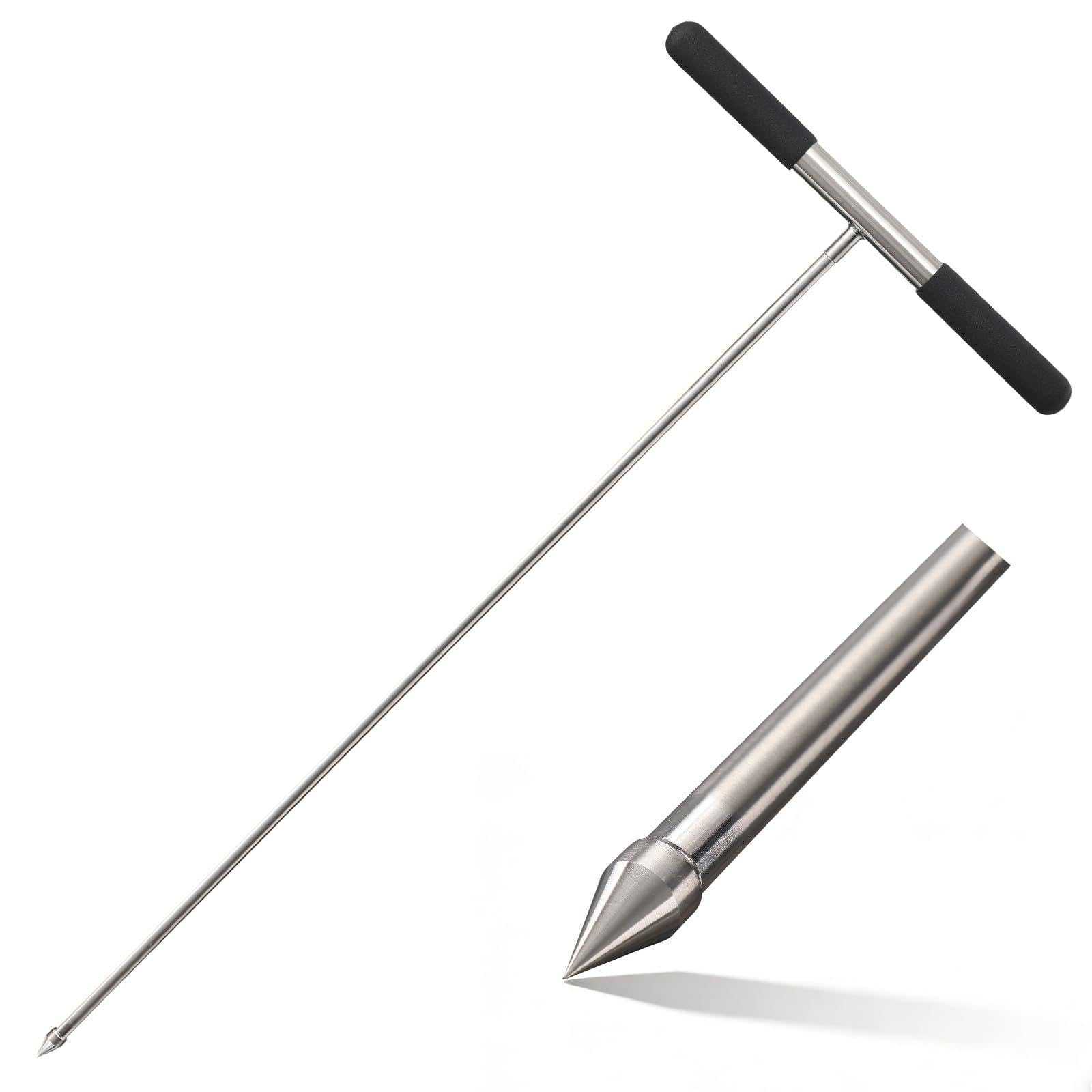
UIABOPZ Stainless — Adjustable 33–48"
Adjustable stainless probe that breaks into sections for compact storage. Sharp tip glides into turf with less effort than rough steel. Stays smooth and rust-free even when stored wet. Tighten threaded connections securely to prevent loosening under heavy use.
Check Price on Amazon →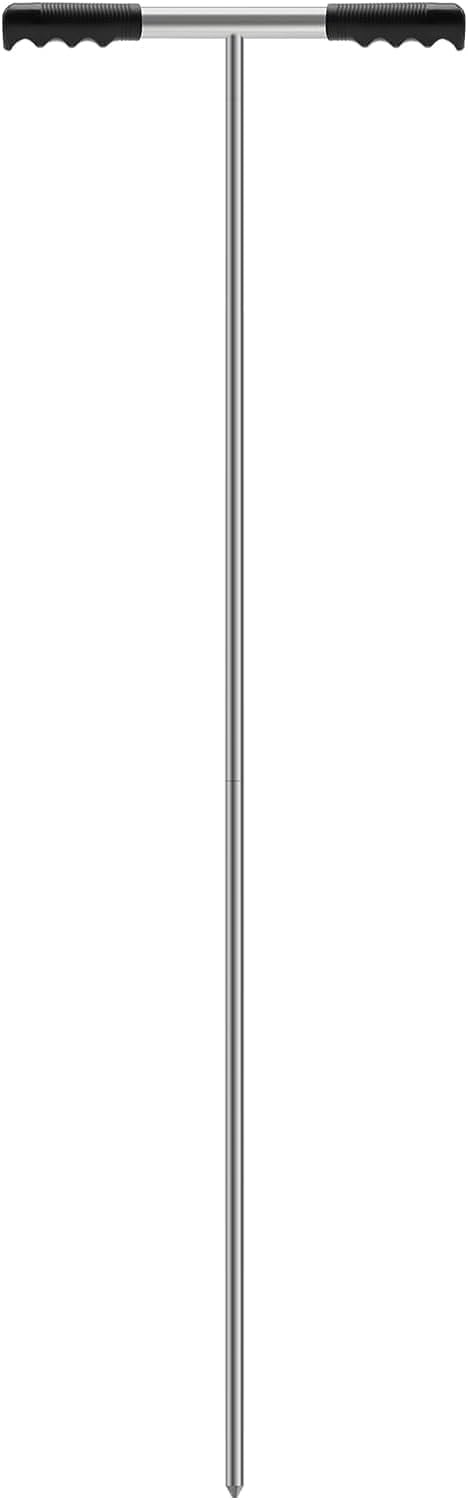
InnoLuxe Adj — Adjustable 32–48"
Stainless adjustable rod that breaks down for easy transport between jobs or storage in a car trunk. Good for occasional use and weekend yard work. Tighten threaded sections firmly before use — loose joints reduce probing efficiency in compacted ground.
Check Price on Amazon →
COCONUT Probe — 48" Sectional
Budget-friendly 48" sectional T-probe for light to moderate probing. Screws together in sections for easy storage. Works well for soft to medium soil. Threaded joints can loosen during heavy use — snug them firmly or add a drop of thread locker. A practical pick if you only need to locate a tank once.
Check Price on Amazon →How to Choose the Right Probe
- One-piece vs sectional: one-piece rods are stiffer and better for hard or rocky soil; sectional rods are easier to store and transport but sacrifice some rigidity
- Length: 36–48" covers most residential tanks; go longer (78") for deep burial or professional use; 21" is enough for very shallow tanks in tight yards
- Material: stainless stays smooth and rust-free in wet soil; alloy steel is heavier and better for forcing through compacted ground
- Handle: a wide T-handle reduces hand fatigue significantly during repeated probing — worth prioritizing
Step 6 — Call a Professional Locator
If steps 1–5 haven't worked, a licensed septic contractor with electronic locating equipment can find the tank accurately on the first try. This typically costs $75–$200 and is worth every dollar before you start digging random holes in your yard. Some contractors include locating as part of a service call fee.
Measure the distance from two permanent landmarks (house corner, large tree) to the tank access point and write it down. Keep this with your home documents. It saves hours of searching at every future service visit and is valuable for any future buyer of your home.
Typically 10–25 feet from the house foundation, in a direct line from where the main sewer pipe exits the house. Most tanks are buried 1–3 feet below grade, though this varies by region and frost depth.
Yes — a soil probe locates the tank top without excavation. Once you've confirmed the location with a probe, you only need to dig if the lid is buried and you need access. If a riser has already been installed, the lid is at or near grade level and no digging is needed at all.
Try the county health department first — many keep records even for old systems. If not available, a professional locator is the most reliable alternative. A licensed plumber can also snake a transmitter cable through the drain line from inside the house and then locate it above ground with a receiver.
Usually 1–3 feet below grade for most residential installations. In colder climates with deeper frost lines, tanks may be buried deeper. Tanks buried very deep (4+ feet) are uncommon but do occur on older properties or in areas with specific soil conditions. A 48" probe rod covers most standard residential depths comfortably.